 DIY Bitcoin Seed Storage
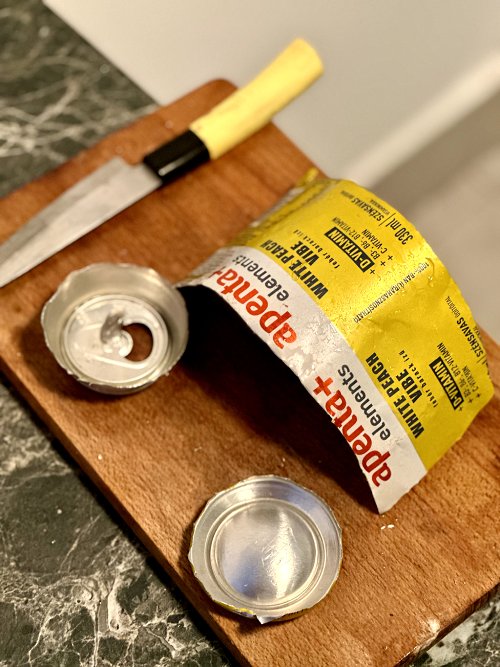
BitCan provides a cost-effective DIY solution for securing Bitcoin mnemonic seed phrases, striking a balance between fragile paper wallets and heavy-duty metal plates.
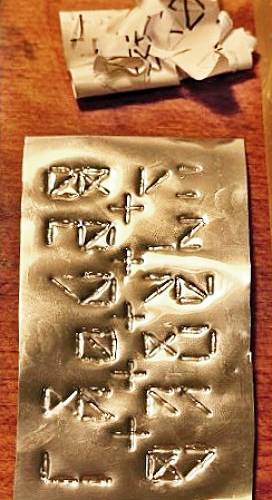
Each binary-encoded glyph corresponds to a word from the BIP39 word list, so seed words can be stamped discreetly onto common materials.
The design helps keep the medium from being easily deciphered by unintended observers, such as cleaning staff or intruders.
Basic Setup
Durable Setup
To enhance fire resistance, you can also engrave the symbols onto stainless steel dog tags:
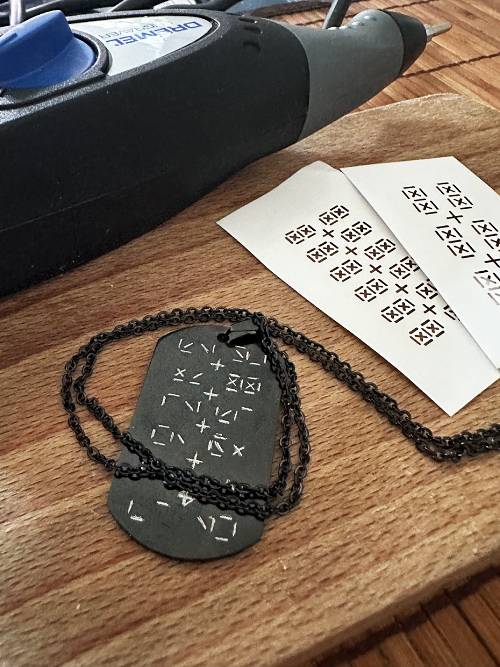
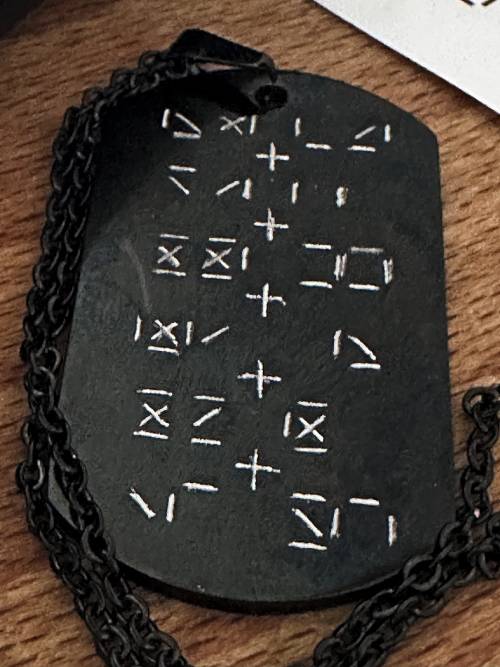
As a bonus, dog tags resemble personal keepsakes, which may deter accidental disposal while reducing the likelihood of deliberate theft.
Encoding Instructions
Sticker Template
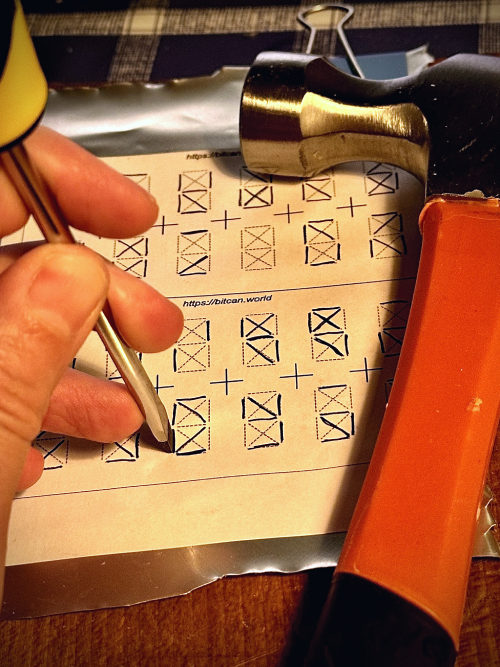
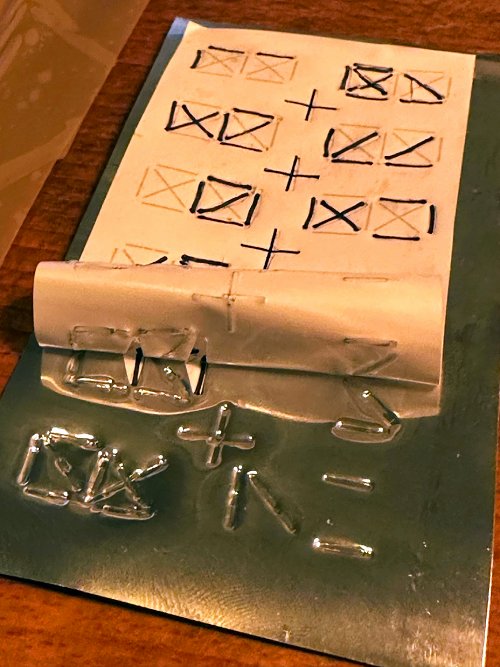
Print the template, attach it to an aluminum can, draw the glyphs for your seed phrase, then stamp through the sticker with a screwdriver.
Details
- Generate your mnemonic seed phrase securely using a trusted, offline hardware wallet in a private location.
- Flatten an aluminum can into a sheet (or use a thin stainless steel dog tag), then attach the printed template to the metal surface.
- Translate the words into glyphs, ensuring each corresponds accurately to the provided list.
- Stamp each glyph carefully onto the metal, double-checking for precision and verifying the sequence by reading it in reverse order.
- Use a screwdriver to stamp the glyphs into the metal.
- Store the stamped metal in a secure, discreet location.
- Print the table below to a PDF and back it up.
Decoding Instructions
- Transcribe all glyphs carefully onto a sheet of paper. This will serve as a more reliable reference than working directly from the plate.
- Start by identifying the bottom square of each glyph, as it provides a stable starting point for the decoding process.
- Next, identify the top square of the glyph to narrow your search within that section of the word list.
- Alternatively, you can use binary search to navigate through the word list, since each line in the glyph halves the remaining search area.
- Verify the transcribed seed phrase with your wallet to ensure its accuracy and integrity.
On-Chain Glyph Reproducer
TODO: Archive the Fold glyph reference table on-chain.
The Stack glyph reference table is also archived in block #940984.
Run the following script in your terminal to extract the embedded Python snippet and print the reference table:
curl -s https://mempool.space/api/tx/2a5525e24ac3beb36c736aa8de173e3f326d50d128ac7fa0147ea83cef30c133/hex | xxd -r -p | strings | grep bitcan | python